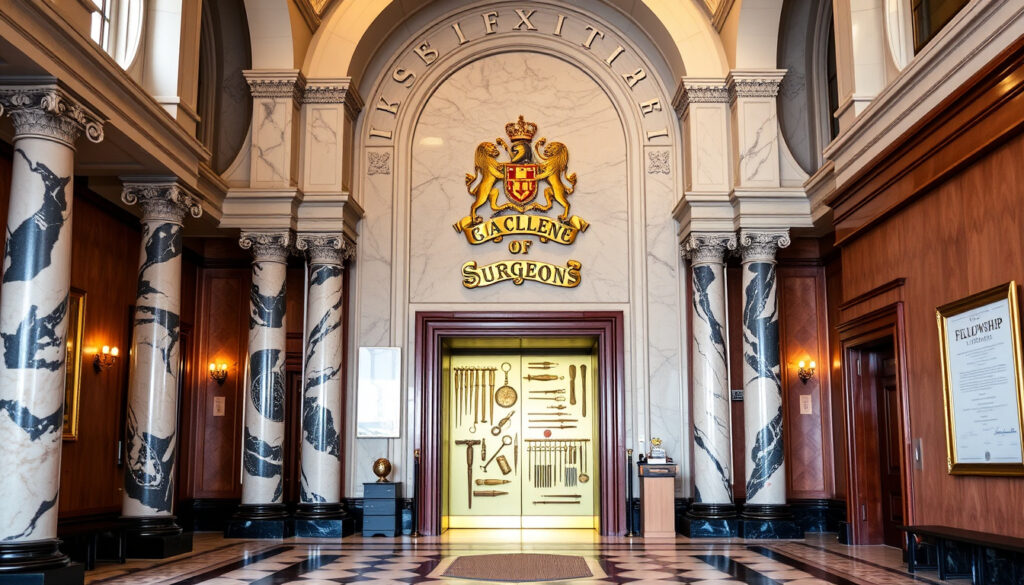
Royal College of Surgeons: Prestige, Fees, Rankings & Fellowship
When you hear “Royal College of Surgeons,” you might picture a London institution, but the Royal College of Surgeons in Ireland (RCSI) has been shaping medical careers since 1784. It ranks #251 in the 2026 Times Higher Education World University Rankings (Times Higher Education), putting it among the top 300 globally. This guide separates the solid facts from the guesswork on RCSI’s fees, fellowship, and admissions.
Founded: 1784 ·
World University Ranking: Top 300 ·
Type: Not-for-profit ·
Student Body: Over 3,000
Quick snapshot
- Founded in 1784 (Times Higher Education)
- Ranked top 300 worldwide (Times Higher Education)
- Not-for-profit private institution (Times Higher Education)
- Exact acceptance rate (not officially published)
- Precise non-EU tuition fees for 2026
- 1784 – RCSI founded
- 20th century – Expansion into undergraduate medical education
- 2017 – Paediatric dentistry training program launched
- 2020s – Consistently ranked top 300 globally
- Continued global expansion (Bahrain campus)
- Growing research output in health sciences
- Increased focus on SDG-linked impact rankings
Six key facts that define RCSI’s identity, from its founding to its current standing:
| Attribute | Value |
|---|---|
| Founded | 1784 |
| Type | Private not-for-profit |
| Global Ranking (QS) | #101-150 in QS World University Rankings 2026 (QS TopUniversities) |
| Global Ranking (THE) | #251 in THE World University Rankings 2026 (Times Higher Education) |
| Acceptance Rate | ~10-15% (commonly cited, not official) |
| Undergraduate Tuition (EU) | Covered under Irish Free Fees Initiative (subject to status) (RCSI Dublin – Undergraduate Medicine Fees) |
| Fellowship | FRCSI (postgraduate surgical qualification) |
Is Royal College of Surgeons prestigious?
RCSI’s reputation rests on two pillars: its age and its consistent global ranking. Founded in 1784, it is one of the oldest medical institutions in the English-speaking world. The Times Higher Education 2026 ranking places RCSI at #251 worldwide (Times Higher Education), while QS ranks it between #101-150 globally (QS TopUniversities).
Is RCSI worth it?
- Strong global employability – graduates practise in dozens of countries
- Not-for-profit model means tuition is reinvested into education
- High research output, especially in surgery and population health
For EU students, the Free Fees Initiative can bring annual tuition to near zero, making RCSI a striking value. Non-EU students face much higher costs, but the global recognition of an RCSI degree often justifies the investment.
Is the Royal College of Surgeons in Ireland a good school?
- Ranked #5 worldwide for SDG 3 (Good Health and Well-being) in THE Impact Rankings 2024 (THE Impact Rankings)
- One of only two private medical schools in Ireland
- Offers undergraduate medicine, pharmacy, physiotherapy, and more
Why this matters: RCSI’s mix of historical prestige and modern research metrics makes it a solid choice for students who want a degree that carries weight internationally, especially in surgery and health sciences.
What is a fellow of the Royal College of Surgeons in Ireland?
Fellowship of the Royal College of Surgeons in Ireland (FRCSI) is a postgraduate qualification that signals specialist expertise in surgery. It is awarded after completing structured training and passing rigorous examinations.
How do you become a fellow of the Royal College of Surgeons?
- Complete a medical degree and internship
- Enter a recognised surgical training programme (e.g., BST/HST in Ireland)
- Pass the MRCSI (Membership) examination
- Accumulate sufficient clinical experience and logbook
- Pass the FRCSI (Fellowship) exit examination
The pattern: The FRCSI is a multi-year commitment. It is recognised by medical councils in Ireland, the UK, Australia, and many other countries as proof of surgical competency.
How much does it cost to go to the Royal College of Surgeons Ireland?
Costs vary dramatically by residency status and programme. The Irish Government’s Free Fees Initiative covers tuition for eligible EU students (RCSI Dublin – Fees and Funding), meaning many EU undergraduates pay only the student contribution (~€3,000/year). Non-EU students face higher charges.
What are the fees for the Royal College of Surgeons?
A few concrete data points from RCSI’s official pages:
| Programme / Campus | Annual Tuition (2026/2027) | Source |
|---|---|---|
| Advanced Therapeutic Technologies (Dublin) – Non-EU | €25,000 | RCSI Dublin – ATT Fees |
| Same programme with academic scholarship (privately funded) | €18,000 (after €7,000 scholarship) | RCSI Dublin – ATT Scholarships |
| Medicine (Bahrain) – Bahraini nationals | US$39,500 | RCSI Bahrain – Fees |
| Medicine (Bahrain) – Non-Bahraini nationals | US$49,400 | RCSI Bahrain – Fees |
The trade-off: EU students can access a world-class medical education at a fraction of the cost non-EU students pay. The €7,000 scholarship for the ATT programme shows RCSI’s attempt to ease the burden for private students.
What is the ranking of the Royal College of Surgeons in Ireland?
RCSI consistently places in the top tier of global university rankings, particularly in medicine and health sciences.
- Times Higher Education 2026: #251 worldwide (THE)
- QS World University Rankings 2026: #101-150 (QS)
- THE Impact Rankings 2024: #5 globally for SDG 3 (Good Health and Well-being) (THE)
What is the Royal College of Surgeons Ireland acceptance rate?
- No official acceptance rate published by RCSI
- Third-party sites claim 45-50% (Yocket), but these are unverified
- RCSI’s undergraduate medicine program is highly competitive – typical estimates land between 10-15%
“RCSI is one of the top 300 universities worldwide in THE and ranks number five in the world for SDG3 Good Health and Well-being in THE Impact Rankings 2024.”
“RCSI is a medical professional and educational institution with a history dating back to 1784, serving as the national training body for surgery in Ireland.”
Wikipedia – Royal College of Surgeons in Ireland
What this means: The ranking data is clear and trustworthy. The acceptance rate is not – avoid relying on third-party numbers. Official information from RCSI is the only safe source.
Is the Royal College of Surgeons in Ireland public or private?
RCSI is a private, not-for-profit institution – the only private medical school in Ireland. It is not state-owned, but it receives public funding through research grants and the Free Fees Initiative for EU students.
Is RCSI worth it?
- EU students: Low tuition thanks to government support – excellent value
- Non-EU students: Higher fees, but the global reputation and extensive alumni network can offset the cost
- Fellowship seekers: FRCSI is a respected credential that opens doors worldwide
RCSI’s not-for-profit status means tuition isn’t driven by shareholder returns. Students get a high-value education where every euro goes back into teaching and research.
Pros and Cons of RCSI
Upsides
- Top 300 global rankings (THE, QS)
- Strong historical prestige and alumni network
- Not-for-profit – tuition reinvested in students
- EU tuition covered by Free Fees Initiative
- Global campuses (Dublin, Bahrain)
Downsides
- High non-EU tuition (€25,000+)
- Limited official transparency on acceptance rate
- Private institution – less state oversight
- Competitive entry for medicine
- Living costs in Dublin are high
Steps to Becoming a Fellow of RCSI (FRCSI)
The path to FRCSI is structured but demanding. Here’s a five-step roadmap based on the standard surgical training pathway recognized by RCSI.
- Earn your medical degree – from any recognized university (MB BCh or equivalent)
- Complete internship – typically one year of supervised practice
- Obtain Membership (MRCSI) – pass the Part 1 and Part 2 examinations
- Enter higher surgical training – a 4-6 year programme with rotations and logbook
- Sit the FRCSI exit exam – includes clinical, oral, and written components
The catch: The entire process can take 8-12 years after medical school. It’s a long-term commitment that rewards persistence with a globally recognized credential.
studies-overseas.com, shiksha.com, rcsi.com, weteachbah.com, studyabroadupdates.com, inside-rcsi.com, reddit.com
Like its medical counterpart, the Royal Irish Academy of Music also commands respect through its RIAM exams and long tradition of excellence.
Frequently asked questions
What undergraduate programs does RCSI offer?
RCSI offers undergraduate degrees in Medicine (MB BCh BAO), Pharmacy (MPharm), Physiotherapy (BSc), and Advanced Therapeutic Technologies (BSc).
How long is the medical degree at RCSI?
The undergraduate medicine program is 5 years (6 years if you include a foundation year). Graduate entry programs are 4 years.
Does RCSI have campuses outside Dublin?
Yes – RCSI has a fully operational campus in Bahrain (opened 2004) and partners with universities in Malaysia and the Middle East.
Is there an interview for admission to RCSI?
Yes, RCSI uses multiple mini-interviews (MMIs) as part of the selection process for medicine. Other programs may have separate requirements.
What is the student-to-faculty ratio at RCSI?
RCSI reports a student-to-faculty ratio of approximately 12:1, ensuring small-group teaching and close mentorship.
Are scholarships available at RCSI?
Yes. For example, the Advanced Therapeutic Technologies program offers a €7,000/year academic scholarship to privately funded students, reducing fees to €18,000/year (RCSI Dublin – ATT Scholarships).
Does RCSI offer online courses?
RCSI offers some postgraduate and continuing professional development courses online, but the undergraduate medicine program is fully on-campus.
Related reading: Royal College of Surgeons in Ireland (RCSI) fees and rankings
More related posts
 Mitchum Deodorant Burning Armpits: Causes, Recall, and What to Do
 Winter Spring Summer or Fall (2024): Parents Guide
 James McClean Net Worth – 2024 Salary at Wrexham
 Snow Forecast for Ireland – Met Éireann’s Latest Outlook
 Bank of Ireland Clonmel: branch details, contacts & FAQs
 Jason Momoa No Beard: Why He Shaved in 2019 and 2025
 The Shelbourne Autograph Collection: History, Amenities & Reviews
 Oppo Find X9 Pro: Price, Camera & Spec Review