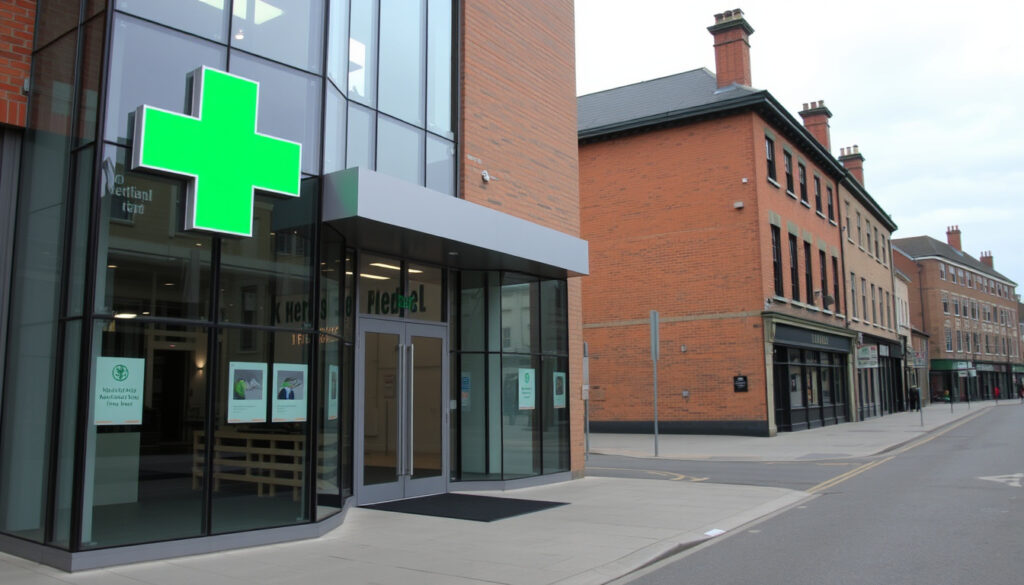
HSE National Drug Treatment Centre: Dublin Rehab Costs & Access
If you or someone you know is looking for drug treatment in Ireland, the HSE National Drug Treatment Centre in Dublin is often the first place people turn to. Established in 1969, it’s the country’s longest-running public addiction service, offering everything from methadone maintenance to counseling.
Established: 1969 ·
Address: McCarthy Centre, 30-31 Pearse Street, Dublin 2 ·
Phone: (01) 6488600 ·
Freephone Helpline: 1800 459 459
Quick snapshot
- Address: McCarthy Centre, 30-31 Pearse Street, Dublin 2 (DTCB Contact Page)
- Freephone helpline: 1800 459 459 (Citizens Information)
- Central Treatment List regulated by HIQA (HIQA)
- Cuan Mhuire provides free residential treatment for eligible patients (Cuan Mhuire)
- Exact waiting times for public treatment vary by region and demand
- Private rehab costs are not standardized and require direct inquiry
- Number of patients on the Central Treatment List not verified in real-time
- Exact wait times for residential programs not publicly tracked
- Cuan Mhuire eligibility criteria not detailed online
- No major timeline events: treatment system is long-established but no recent time-sensitive changes
- Patients can call the HSE helpline 1800 459 459 for immediate advice and referral
- For private care, direct inquiry with individual clinics is the next step
Six key facts, one pattern: the system is layered—public, charity, and private—each with different rules and costs.
| Label | Value |
|---|---|
| Founded | 1969 |
| Official Name | National Drug Advisory and Treatment Centre / Drug Treatment Centre Board (DTCB) |
| Helpline | 1800 459 459 |
| Address | 30-31 Pearse Street, Dublin 2 |
| Central Treatment List Regulator | HIQA |
| Average Rehab Stay (residential) | 28–90 days |
What is the address of the HSE National Drug Treatment Centre?
The HSE National Drug Treatment Centre is located at the McCarthy Centre, 30-31 Pearse Street, Dublin 2, Ireland (Drugs Directory). It is also known as the Drug Treatment Centre Board (DTCB) headquarters.
How to contact the HSE National Drug Treatment Centre by phone
- Main phone: (01) 6488600 (DTCB Contact Page)
- Freephone helpline: 1800 459 459 — operated by the HSE for confidential advice (Citizens Information)
- Email: nationaldrugtreatmentcentre@healthmail.ie (DTCB Contact Page)
Who is the Access Officer for the HSE National Drug Treatment Centre?
The Drug Treatment Centre Board has an Access Officer whose role is to facilitate access for people with disabilities. To contact the Access Officer, call the main line or email the centre directly. Details are available through the DTCB website (DTCB Contact Page).
The Access Officer is a legal requirement under Irish disability law, but details are not widely published. If you need accommodations, call ahead to confirm availability.
The implication: the centre is easy to reach physically and by phone, but disability access details require proactive inquiry.
How much does drug rehab cost in Ireland?
Cost depends on whether you choose public HSE treatment, a charity service, or a private clinic. Public non-residential services are free, and some residential stays may be free if you have a medical card (Citizens Information).
Cost of private drug rehab in Ireland
Private treatment programmes are not free, and prices vary widely depending on the programme and length of stay (Citizens Information). Smarmore Castle is one example of a private facility; costs can run into thousands of euros per month.
Is Cuan Mhuire free for drug treatment?
Yes — Cuan Mhuire is a charity that provides free residential treatment for alcohol and drug addiction to those who qualify. It is funded by donations and HSE grants. Self-referral and assessment are required.
The trade-off: free treatment may have waiting lists, while private clinics offer faster access at a steep price.
What is the Central Treatment List?
The Central Treatment List (CTL) is a national register of people receiving opioid substitution treatment (methadone or buprenorphine/naloxone) in Ireland. It was established under Statutory Instrument No. 225 of 1998 (Irish Statute Book).
What is the Central Drug Treatment List?
The terms “Central Treatment List” and “Central Drug Treatment List” are often used interchangeably. The CTL is a complete register of all patients receiving methadone treatment for opiate-use problems (HIQA). Each patient receives a unique client number to prevent double prescribing (Comptroller and Auditor General).
Who maintains the Central Treatment List in Ireland?
HIQA (the Health Information and Quality Authority) oversees the CTL as a national administrative database (HIQA). The Drug Treatment Centre Board administers it on behalf of the HSE (Drugs and Alcohol Ireland).
Why this matters: the CTL is invisible to most patients but is the backbone of safe opioid prescribing in Ireland. Without it, a patient could receive methadone from multiple sources.
How long do you go to rehab for drugs?
Rehab duration varies by program type, severity of addiction, and individual progress. The average residential stay is between 28 and 90 days.
What is the average stay in drug rehab?
- Residential programs: typically 30 to 90 days
- Outpatient programs: can last several months to a year
Factors that affect rehab duration
Duration depends on the substance used, co-occurring mental health conditions, and the treatment approach. Longer stays are generally associated with better outcomes for severe addiction.
Public residential bed availability in Ireland is limited, so actual stay length may be shorter than the ideal — patients sometimes transition to outpatient care earlier than planned.
The pattern: shorter programs (28 days) are common for detox, while longer programs (90 days) target sustained recovery.
What are the 7 main drugs and the 8 opioid drugs?
Understanding drug classifications helps patients and families know what treatment options exist. Ireland’s drug classification system is based on the Misuse of Drugs Regulations.
What are the 7 main types of drugs?
- Stimulants (e.g., cocaine, amphetamines)
- Depressants (e.g., alcohol, benzodiazepines)
- Opioids (e.g., heroin, morphine)
- Hallucinogens (e.g., LSD, psilocybin)
- Cannabis
- Inhalants (e.g., solvents, nitrous oxide)
- Anabolic steroids
What are the 8 opioid drugs listed under Schedule 8?
Under Irish law, Schedule 8 opioids are strictly controlled. The eight drugs commonly listed are: codeine, morphine, oxycodone, hydromorphone, fentanyl, methadone, buprenorphine, pethidine.
What this means: methadone and buprenorphine are both on the list — they are used as treatment for opioid addiction under the CTL.
Confirmed facts vs. what’s unclear
Confirmed facts
- HSE National Drug Treatment Centre address is McCarthy Centre, 30/31 Pearse Street, Dublin 2 (DTCB Contact Page)
- Freephone helpline 1800 459 459 is operated by HSE (Citizens Information)
- Central Treatment List is maintained by HIQA (HIQA)
- Cuan Mhuire provides free residential treatment for those who qualify (Cuan Mhuire)
What’s unclear
- Exact waiting times for public treatment vary by region and demand
- Private rehab costs are not standardized and require direct inquiry
- Number of patients on the Central Treatment List not verified in real-time
What experts say
The HSE Drugs and Alcohol Helpline is a confidential support and referral service.
— HSE Drugs and Alcohol Helpline page (Citizens Information)
Established in 1969, the Drug Treatment Centre Board is the longest running centre of its kind in Ireland.
— Drug Treatment Centre Board (DTCB) (DTCB Contact Page)
The Central Treatment List is a complete register of all patients receiving methadone treatment for opiate-use problems in Ireland.
— HIQA (HIQA)
Each person registered on the CTL receives a unique client number so patients can receive methadone from one source only.
— Comptroller and Auditor General (C&AG Special Report 64)
For anyone navigating addiction treatment in Ireland, the choice is clear: call the HSE helpline first to explore free public options, then consider Cuan Mhuire if you qualify, or a private clinic if you need faster access and can afford it. The system works, but it requires proactive steps.
Frequently asked questions
How do I access the HSE National Drug Treatment Centre?
Call the freephone helpline 1800 459 459 or visit the centre at 30-31 Pearse Street, Dublin 2. No referral is required for the helpline, but an assessment is needed for treatment.
Do I need a referral to use the HSE drug treatment service?
You can self-refer by calling the helpline. A GP referral may also be accepted for some programs.
What documents do I need to bring to my first appointment?
Bring photo ID, proof of address, and any medical records or prescriptions you have.
Can I go to a private rehab instead of HSE?
Yes. Private rehab is available but costs money. Check if your health insurance covers it.
Is there a waiting list for the Central Treatment List?
The CTL is a registry, not a waiting list. However, accessing a clinic that prescribes methadone may have local waiting lists.
What is the difference between the Central Treatment List and the Central Drug Treatment List?
They are the same thing. The terms are used interchangeably.
Does the National Institute on Drug Abuse (NIDA) have any role in Ireland?
No. NIDA is a US federal agency; it does not operate in Ireland. Ireland’s equivalent is the HSE and the Drug Treatment Centre Board.
More related posts
 Kingdom of the Planet of the Apes: Hit or Flop Explained
 London Gatwick to London City: Trains, Coaches & Taxi Guide
 2025 All-Ireland Football Championship: Kerry Win 39th Title
 Cheapest Car Insurance Ireland: Compare Quotes & Save
 Samsung Galaxy A02 Buy: Worth It in 2024? Price, Specs & Trade-In
 Best King Size Mattress Ireland: Sizes, Prices & Health Picks
 Aptamil Ready to Feed: Safety, Storage & Feeding Guide
 2025 US Masters Leaderboard: Winner, Results, Prize Money