Dublin St. Patrick’s Day Parade 2026: Route, Start Time & Tickets
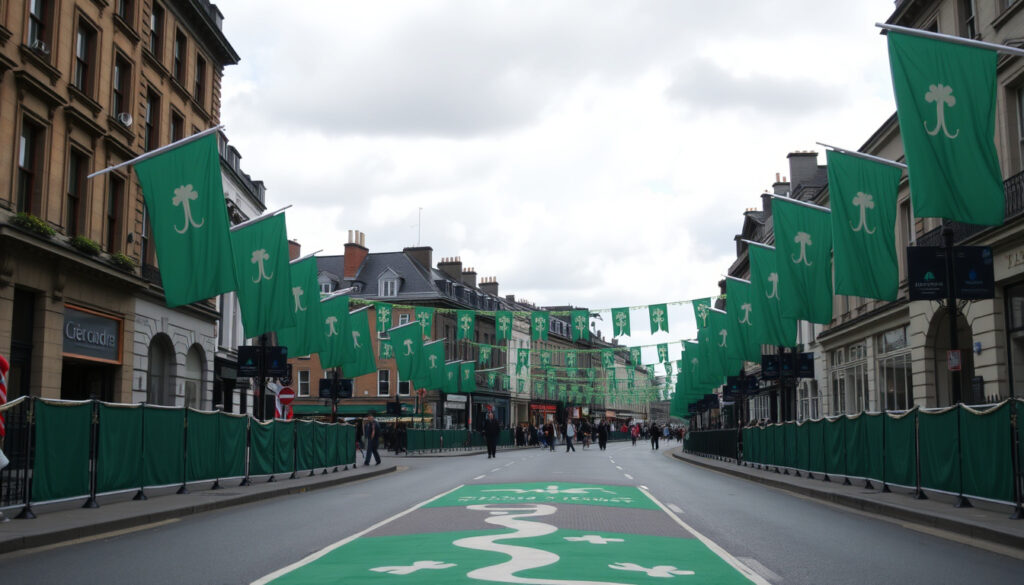
There’s something about seeing Dublin’s streets fill with green on 17 March that stays with you long after the last float passes. Whether you’re planning your first visit or returning for another round, the National St. Patrick’s Day Parade is the centrepiece of a week-long festival that draws over half a million spectators. This guide cuts through the green beer hype to give you the practical details you actually need: start time, route, where to stand, and what to expect.
Parade start time: 12:00 PM (17 March) ·
Parade duration: Approx. 2–3 hours ·
Parade route length: 3.2 km ·
Estimated spectators: Over 500,000
Quick snapshot
- Parade start time is 12:00 PM on 17 March (St. Patrick’s Festival official site)
- Route begins at Parnell Square and follows O’Connell Street (St. Patrick’s Festival)
- Grandstand tickets are sold on the festival website (St. Patrick’s Festival parade page)
- Exact road closure timing may vary yearly
- Live stream availability has not been confirmed for 2026
- Specific superstitions and colour etiquette are not officially codified
- 14–16 March: Festival cultural events and concerts (St. Patrick’s Festival)
- 17 March, 12:00 PM: National Parade starts (St. Patrick’s Festival)
- Post-parade: pubs and restaurants busy, traditional music sessions (St. Patrick’s Festival)
- Evening: Skyfest fireworks (if scheduled) (St. Patrick’s Festival)
Eight key details, one pattern: the official sources agree on the core facts, but the devil is in the timing and the crowds.
| Detail | Value |
|---|---|
| Date | 17 March 2026 |
| Start time | 12:00 PM |
| Route start | Parnell Square |
| Route end | Cuffe Street/Kevin Street junction |
| Duration | 2–3 hours |
| Road closures | From early morning until ~5:00 PM |
| Grandstand tickets | Available from St. Patrick’s Festival |
| Live stream | Available on official website and social media (2025 confirmed, 2026 TBC) |
What time is the St. Patrick’s Day parade in Dublin?
What time does the parade start?
- The National St. Patrick’s Day Parade begins precisely at 12:00 PM on 17 March 2026, according to the St. Patrick’s Festival (official festival organisers).
- Arrive by 10:30 AM at the latest to secure a decent free spot.
What is the parade route?
- The route starts at Parnell Square in the north city centre (St. Patrick’s Festival route map).
- It heads down O’Connell Street, crosses O’Connell Bridge, and continues through Westmoreland Street, Dame Street, and past Christchurch Cathedral before terminating at the Cuffe Street/Kevin Street junction.
- The official route length is 3.2 km (St. Patrick’s Festival).
How long does the parade take?
- Duration is approximately 2–3 hours (St. Patrick’s Festival parade page).
- The 2026 edition features 12 large-scale floats and over 3,000 participants.
Will there be road closures?
- Road closures begin early morning on 17 March and are lifted in phases after the parade ends, typically by 5:00 PM (St. Patrick’s Festival).
- Dublin City Council releases specific closure times closer to the date.
The implication: Getting the timing right is the difference between a front-row view and watching from behind a crowd — arrive after 10:30 AM and you risk losing the best free spots along the route.
Where is the best place to watch the St. Patrick’s Day parade in Dublin?
Best free viewing spots
- O’Connell Street offers the widest avenue and the best sightlines for free viewing (festival route advice).
- Dame Street and the Christchurch area are less crowded but have narrower pavements.
Grandstand tickets and where to buy them
- Grandstand seating is available in limited numbers via the St. Patrick’s Festival website and are “on sale now” for 2026.
- Tickets are priced between €20 and €30 depending on location.
Can I watch the parade online live?
- An official live stream has been available in previous years on the festival website and social channels, but 2026 details are not yet confirmed.
Free viewing spots along O’Connell Street fill by 10:30 AM. Grandstand seats guarantee a view but cost €20–30 and sell out weeks in advance.
Bottom line: For the best free view, plant yourself at O’Connell Street before 10:30 AM. If you prefer a reserved seat, buy grandstand tickets early from the festival site.
What colour is bad to wear on St. Patrick’s Day?
What do the colours green, white and orange symbolise?
- The Irish flag – green for the Catholic/nationalist tradition, orange for the Protestant/unionist tradition, and white for peace between them.
- Green is the universal colour of St. Patrick’s Day celebrations.
Is it bad luck to wear orange on St. Patrick’s Day?
- In the Republic of Ireland, wearing orange is not considered bad luck, but it can be read as a political statement linked to Northern Ireland’s Orange Order (St. Patrick’s Festival cultural context).
- Most Irish people choose green; orange is rare and may raise eyebrows.
What colour should Protestants wear?
- There is no rule. Many Protestants wear green alongside everyone else. In Northern Ireland, orange is more common among unionists.
The nuance: Colour etiquette is a historical sensitivity, not a strict social rule. In Dublin, green is safe and expected. If you want to avoid any awkwardness, stick with green.
Is it worth it to go to Dublin for St. Patrick’s Day?
What makes Dublin special on St. Patrick’s Day?
- Dublin hosts the largest parade in Ireland, described by Ireland’s official tourism site (Ireland.com) as “one of the world’s biggest parades”.
- The St. Patrick’s Festival runs from 14 to 17 March with concerts, family events, and cultural performances (festival programme).
What other events are part of the festival?
- 14–16 March: The “Festival Quarter” at Merrion Square with live music, food stalls, and workshops.
- 17 March: The parade itself, followed by a city-wide pub and music scene.
Pros and cons of visiting Dublin for the parade
Upsides
- Unique atmosphere and cultural experience
- Free parade with no ticket required
- Multiple days of events and entertainment
Downsides
- Very large crowds – over 500,000 spectators
- Accommodation prices spike 2–3× normal rates
- Road closures and public transport disruption
Why this matters: For first-time visitors, Dublin on St. Patrick’s Day is a bucket-list experience – but only if you plan ahead for crowds and costs. Casual travellers may find better value visiting a week before or after.
What is the luckiest thing to do on St. Patrick’s Day?
Common St. Patrick’s Day superstitions
- Wearing green is said to protect you from leprechauns – a bit of folklore that dates back to the early 20th century.
- Finding a four-leaf clover is considered extremely lucky.
What brings good luck on the day?
- Eating corned beef and cabbage is a tradition popularised by Irish-Americans, though less common in Ireland itself.
- Kissing the Blarney Stone in Cork is the most famous luck-granting act – but you’ll need to leave Dublin for that.
Traditional Irish blessings and practices
- “May the road rise to meet you” is a classic Irish blessing often shared on the day.
- Some locals attend early Mass at St. Patrick’s Cathedral to start the day with a blessing.
The pattern: Most luck traditions are light-hearted and tourist-friendly. The real Irish approach: enjoy the day with friends and a pint of stout.
How to plan your Dublin St. Patrick’s Day parade experience
- Book accommodation early – Hotels and hostels in Dublin city centre book out months in advance for 17 March.
- Check road closures – Dublin City Council publishes closure maps a week before; plan your transport accordingly.
- Arrive before 10:30 AM – Free viewing spots fill fast; bring snacks and a raincoat.
- Wear green – It’s the expected colour and adds to the atmosphere.
- Consider grandstand tickets – If you want a guaranteed seat, buy from the festival website as early as possible.
- Use public transport – Luas and DART run on holiday schedules; avoid driving into the city centre.
- Stay for the evening – The party continues in pubs like The Temple Bar area with live trad music.
St. Patrick’s Festival timeline
- 14–16 March (pre-parade events) – St. Patrick’s Festival cultural events, concerts, and family activities (festival programme).
- 17 March (morning) – Road closures begin, early arrivals secure viewing spots.
- 17 March 12:00 PM – National St. Patrick’s Day Parade starts (St. Patrick’s Festival).
- 17 March ~2:00–3:00 PM – Parade ends, roads gradually reopen.
- 17 March (evening) – Pubs and restaurants busy, traditional music sessions.
Arriving early means a great view but a long wait in cold weather. Balancing comfort and spectacle is the day’s biggest challenge for casual attendees.
Confirmed facts vs What’s still unclear
Confirmed facts
- Parade starts at 12:00 PM on 17 March 2026 (St. Patrick’s Festival)
- Route runs from Parnell Square to Cuffe Street/Kevin Street (St. Patrick’s Festival)
- Grandstand tickets available via festival website (St. Patrick’s Festival)
- Over 500,000 spectators expected
What’s unclear
- Exact road closure timing may vary yearly
- Live stream details for 2026 not yet published
- Specific superstitions are folklore, not official
What they say
The parade starts at 12:00 on 17 March and runs from Parnell Square to the Cuffe Street/Kevin Street junction.
— St. Patrick’s Festival, official parade route page
One of the world’s biggest parades takes place in Dublin on St. Patrick’s Day.
No tickets are required to attend the parade as a spectator.
— St. Patrick’s Festival, parade page
For first-time visitors to Dublin, the National St. Patrick’s Day Parade delivers exactly what the hype promises – a massive, joyful street celebration with world-class pageantry. The trade-off is the cost and the crowd. For anyone planning a 2026 trip, the decision is clear: book accommodation and grandstand tickets early, arrive by 10:30 AM on 17 March, or risk watching from behind a sea of green hats.
The 2026 Dublin St. Patrick’s Day parade will follow a route similar to the 2025 Dublin St. Patricks Day parade, which also started at Parnell Square.
Frequently asked questions
Do I need tickets for the St. Patrick’s Day parade in Dublin?
No. The parade is free to attend as a spectator along the route. Grandstand tickets are optional and paid.
Can I bring alcohol to the parade?
No. Public drinking is prohibited along the parade route. Pubs open from midday.
Is the St. Patrick’s Day parade family-friendly?
Yes. The parade is designed as a family event with floats, bands, and performers.
What happens if it rains on St. Patrick’s Day in Dublin?
The parade goes ahead in all weather. Dress warmly and bring a raincoat.
Are there fireworks during the St. Patrick’s Festival?
Yes. The Skyfest fireworks display usually takes place in the evening (check festival programme).
Can I bring my dog to the parade?
Dogs are allowed on the route but must be kept on a lead. Large crowds can be stressful for pets.
What should I wear to the parade besides green?
Comfortable shoes, warm layers, and a raincoat. Green is recommended but not compulsory.
More related posts
 What Is a Cookie on a Website? Definition, Uses, and Safety
 Off License Opening Hours Ireland: Times for Alcohol Sales
 Drunk Elephant Bronzing Drops: Worth It? Honest Review & How to Use
 Best Exercises for Flexibility at Home: A Complete Guide
 Royal Tara Golf Club Membership, Cost & Shane Lowry
 Elf on Shelf Ideas: Rules, Hiding Spots, and Replacements
 Oldest Person in Ireland 2026: Record & Update