Is Kilkenny a City? Status, History and Facts in Ireland
Ask any Irish person for directions to Kilkenny and they’ll likely call it “the city” — yet the official classification tells a more complicated story. Kilkenny wears its city title with centuries of pride, having received a royal charter from King James I in 1609. The twist? Under modern Irish law, it operates as something rather different.
Official Status: Municipal District of Kilkenny City · Location: County Kilkenny, South-East Region, Leinster · Historical Note: City status abolished in 1898 · Common Reference: Referred to as medieval city · Province: Leinster
Quick snapshot
- Kilkenny was granted city status by King James I in 1609 via royal charter (Wikipedia)
- The Local Government Act 2001 preserved Kilkenny’s ceremonial city title (Wikipedia)
- Kilkenny now operates as the Municipal District of Kilkenny City since 2014 reforms (Kids Kiddle)
- Exact scope of ceremonial versus legal distinctions under current municipal district structure
- Whether future legislative reforms could further alter Kilkenny’s status
- 1609: Royal charter grants city status
- 1898: Corporate county status abolished
- 2001: Local Government Act preserves ceremonial city title
- 2014: Becomes Municipal District of Kilkenny City
- Kilkenny will likely continue using “city” in tourism and ceremonial contexts while operating as a municipal district
- Future status discussions depend on broader Irish local government reforms
| Attribute | Details |
|---|---|
| Location | County Kilkenny, Ireland |
| Region | South-East |
| Province | Leinster |
| Status | Municipal District of Kilkenny City |
| Nickname | Ireland’s Medieval City |
Is Kilkenny a city or a town?
Here’s where it gets interesting. Legally, Kilkenny is a municipal district — not a city in the way Dublin or Cork are cities. Yet it retains the ceremonial right to call itself “city” based on that 1609 royal charter. The Local Government Act 2001 specifically preserved Kilkenny’s city description for ceremonial and traditional purposes, making it a unique hybrid in Irish local government.
Historical city status
The history runs deep. Kilkenny received its city charter from King James I in 1609, culmination of 400 years of gradual recognition, according to the Kilkenny City Borough Council History. In Norman times, the settlement actually had two separate townships: Irishtown (chartered by bishops of Ossory) and Englishtown (established by William Marshal), which were united in 1843. Kilkenny was the medieval capital of Ireland and ancient capital of the Ossory kingdom.
Current municipal designation
The Local Government (Ireland) Act 1898 abolished Kilkenny’s corporate county status, and the Municipal Corporations Act 1840 reconstituted it as a borough. In 2014, all boroughs and towns were dissolved under reforms, and Kilkenny became the Municipal District of Kilkenny City. According to Kids Kiddle, it is the only city in the Republic of Ireland that was not a “county borough” under historical administrative divisions.
Kilkenny occupies a peculiar legal space — it holds ceremonial city status through historical precedent while lacking the administrative authority that defines Ireland’s actual cities.
What makes Kilkenny a city?
The question of what constitutes a city in Ireland has no single legal answer. In Britain, “city status” is a formal honor granted by monarch, but Irish law handles it differently since independence. Kilkenny’s claim rests entirely on historical precedent rather than population or administrative powers.
Criteria for city status in Ireland
Irish cities generally fall into two categories: county boroughs (like Dublin, Cork, Galway, Limerick, and Waterford) with full administrative authority, and ceremonial cities like Kilkenny. The Wikipedia analysis on city status notes that in 2000-2001, the Local Government Bill initially threatened to reclassify Kilkenny as a “town,” prompting objections from local councillors and TDs Phil Hogan and John McGuinness. New provisions ultimately recognized Kilkenny’s city status per historical practice.
Kilkenny’s medieval heritage
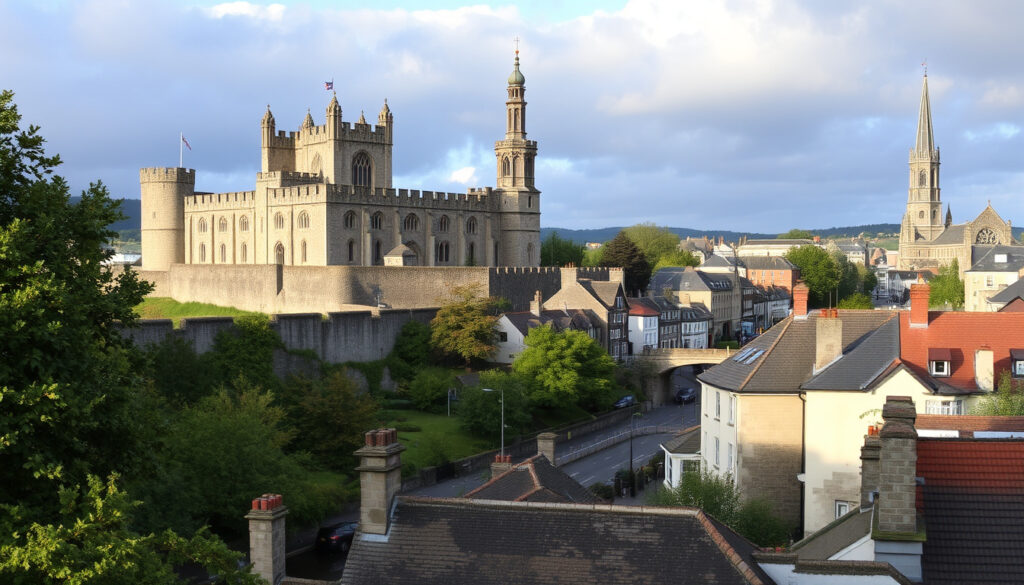
The city’s character is unmistakably urban. Built on both banks of the River Nore, Kilkenny features a 12th-century castle and cobbled lanes that attract visitors seeking medieval atmosphere. Kilkenny Castle was built in the early 1200s and given to the Butler family in the 1300s, who held it until 1967. St Canice’s Cathedral, the settlement’s ecclesiastical foundation, was completed in 1285. The city served as the de facto capital of Ireland during the Irish Catholic Confederation (1641-1649), and James II resided in Kilkenny Castle from November 1689 to November 1689.
It is a shibboleth to refer to it as a ‘town’. — Wikivoyage guide
What are the 5 cities of Ireland?
The Republic of Ireland has five principal cities, though Kilkenny’s inclusion in city discussions often sparks debate. Dublin, Cork, Limerick, Galway, and Waterford are the five county boroughs with full administrative city status, but Kilkenny frequently appears in conversations about Irish cities due to its historical charter.
List of official Irish cities
The five traditional cities are Dublin (the capital and largest), Cork (second city), Limerick, Galway, and Waterford. According to Britannica, Kilkenny is legally a municipal borough rather than a city under modern Irish local government law, but retains ceremonial city status based on its 1609 charter. This makes it a frequent subject in Irish cities lists despite its administrative classification.
Kilkenny’s place in discussions
The Irish Times reported in 2001 on campaigns against government plans to strip Kilkenny’s city status. Local representatives argued that “all Kilkenny wanted was to be allowed to continue to use the term ‘city’ in recognition of its ancient tradition.” RTE also covered the 2001 demotion fears during the Local Government Bill debates.
Kilkenny’s case shows that city status in Ireland is partly ceremonial — rooted in history and community identity rather than pure administrative function.
What is the smallest city in Ireland?
Among Irish cities, Kilkenny often figures in discussions about the smallest. Population estimates vary: the Kilkenny City Borough Council History cites approximately 8,500 in the city proper and 25,000 including the borough and environs (historical estimate), while Wikivoyage estimates 27,000 in 2022.
Size comparisons among Irish cities
The five county boroughs — Dublin (population over 1.2 million in the city proper), Cork (around 210,000), Limerick (over 100,000), Galway (around 80,000), and Waterford (around 53,000) — are all significantly larger than Kilkenny’s roughly 27,000 residents. County Kilkenny as a whole had a population of 87,558 in 2006 and 95,419 in 2011 according to Britannica.
Where is Kilkenny in Ireland?
Kilkenny sits in the South-East region of Ireland, within the province of Leinster. It lies roughly 120 kilometers southwest of Dublin, making it accessible for day trips from the capital. The city straddles the River Nore in County Kilkenny, giving it the picturesque setting that fuels its tourism appeal.
Geographic position
The city is positioned in the heart of County Kilkenny, which covers 2,072 square kilometers of the South-East. Ireland.com describes Kilkenny as the “Marble City” due to local black marble buildings — a nickname reflecting its distinctive architectural heritage. The county is bordered by Carlow, Wexford, Waterford, and Tipperary.
Proximity to other regions
Kilkenny’s location makes it a gateway between Dublin and the South-West. The M9 motorway connects it to Waterford and onward to Rosslare Europort. Dublin is approximately 90 minutes by car. The city also has rail connections to Dublin Heuston via Carlow or Kildare. According to Wikivoyage, Kilkenny feels like a compact city rather than a large town due to its medieval street pattern.
What people say about Kilkenny
“In law a borough, Kilkenny’s claim to be a city is based on a charter of 1609, which granted that status.” — Kilkenny City Borough Council History
“All Kilkenny wanted was to be allowed to continue to use the term ‘city’ in recognition of its ancient tradition.” — Local representatives in deputation to Minister (via Wikipedia)
“The medieval city of Kilkenny” — Ireland.com tourism description
Tourism marketing widely calls Kilkenny “the city,” and locals will likely correct you if you call it a town — but the correction rests on ceremony, not current administrative law. Both perspectives are valid.
Related reading: Galway · Dublin
ieo.ucla.edu, discoveringireland.com, irishcentral.com, rte.ie
Kilkenny’s medieval castle often provides a stunning backdrop for Ireland’s Christmas markets, underscoring its enduring cultural draw.
Frequently asked questions
What county is Kilkenny in?
Kilkenny is in County Kilkenny, which is located in the South-East region of Ireland within the province of Leinster.
What is Kilkenny famous for?
Kilkenny is famous for its medieval castle (built in the early 1200s), St Canice’s Cathedral (completed in 1285), traditional pubs, crafts scene, and distinctive black marble architecture that earns it the nickname “Marble City.”
What is the population of Kilkenny City?
The city proper has an estimated 27,000 residents as of 2022, according to Wikivoyage. The broader borough area including environs was historically estimated around 25,000.
Is Kilkenny the smallest city in Ireland?
Among settlements that use the “city” title, Kilkenny is likely the smallest by population. Its population of roughly 27,000 is smaller than any of the five county borough cities (Dublin, Cork, Limerick, Galway, Waterford).
What’s the prettiest city in Ireland?
Beauty is subjective, but Kilkenny consistently ranks among Ireland’s most picturesque cities due to its medieval architecture, cobbled lanes, and riverside setting. Galway is often cited for its bohemian atmosphere, while Dublin offers grand Georgian architecture.
Where is Kilkenny Ireland on a map?
Kilkenny is located in the South-East of Ireland, approximately 120 kilometers southwest of Dublin, straddling the River Nore in County Kilkenny within the province of Leinster.
Does Kilkenny have a castle?
Yes, Kilkenny Castle is one of Ireland’s best-preserved medieval castles. Built in the early 1200s by Norman conquerors, it was given to the Butler family in the 1300s and remained in their possession until 1967. Today it operates as a public museum.
The distinction matters most in administrative terms and for locals who take civic pride in the title. For visitors and investors, Kilkenny functions as a city regardless of its municipal district status — the medieval character, tourist infrastructure, and community identity all align with urban expectations.
More related posts
 How Many Weeks Between Two Dates? – Calculator & Guide
 Winter Spring Summer or Fall (2024): Parents Guide
 ASUS ROG Ally X: Battery, Specs & Steam Deck Comparison
 India vs New Zealand: Head-to-Head Record & Trophies
 Houses for Sale in Donaghmede: Repossessed and New Builds
 Carrot and Parsnip Soup Recipe: Easy, Healthy, and Delicious
 Al Ahly FC vs Inter Miami Lineups: Confirmed XIs, Score & Report
 Shamrock Rovers F.C. Standings 2026: League & Europe